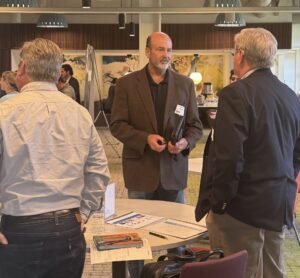
AXIS Mentee Wins Big at MIRA Awards

Last month, at the 2026 MIRA Awards, Alicia Mckoy took home the Resilience Award for her Indianapolis-based tech company, Peak Mind. Mckoy’s company uses AI, biometrics, and immersive tools like virtual reality to help individuals and organizations better understand and manage stress in real time. Judges at MIRA noted Mckoy’s ability to advocate for others navigating trauma while remaining an active contributor to Indiana’s entrepreneurial and tech communities. Her story reflects strength, determination, and an unwavering commitment to turning hardship into hope. Mckoy is also an alumna of BioCrossroads’ AXIS Mentoring Program and says the program was crucial in getting the company established.

Tell me about Peak Mind and the problem you are trying to solve.

Peak Mind is focused on one of the most expensive and least measured risks in the workforce. Chronic stress. Most organizations measure productivity and safety in real time, but stress is often detected only after performance declines or health conditions develop. Our work centers on identifying biological and behavioral signals early, so individuals and employers can take action before stress becomes an illness. The objective is prevention, stability, and sustained performance.

What motivated you to start this company?

The motivation came from repeated observation of high-performing professionals who were succeeding externally while their health and well-being was quietly deteriorating. Traditional wellness programs were not designed to detect that strain early. Over time, it became clear that stress needed to be treated as a measurable health condition rather than a temporary feeling. That realization led to years of research focused on building practical tools that help people recognize and manage stress before it becomes a long-term and more expensive problem.

When did you join AXIS, and why did you sign up? How has the program helped your company?

We joined the AXIS mentoring program through BioCrossroads when the company was transitioning from research into commercialization. The program provides us with structured guidance from experienced leaders who understand regulatory pathways, reimbursement models, and scaling health technology. That support is strengthening our strategic planning, market entry decisions, and expanding our network across the life sciences community.

How does it feel to win the Resilience Award at MIRA?

Receiving the Resilience Award from TechPoint is both humbling and energizing. The recognition reflects the significance of the challenges that I have faced and the persistence to continue to build solutions that improve human health for those that use our innovation. It also signals to the broader technology community that resilience is not just about endurance but about continuing to show up during difficult periods. It felt great being able to say to the 1,200+ attendees to take care of their own well-being. That is the core of my mission, and I am honored I was given the stage to do so.

What’s next for Peak Mind?

The next phase of Peak Mind focuses on the products we are spinning out into commercialization. Products that we have seen great success in early pilots and clinical testing such as our biometric indicators integration to support daily preventive care. The long-term goal is to make stress measurement as routine as monitoring blood pressure for those who are worried about its impact on their quality of life. When users can see risk earlier, they can protect health, stabilize performance, and reduce long-term costs.

AXIS Mentor and Mentee Q&A

Launched by BioCrossroads in 2025, AXIS mentoring program is helping Indiana life sciences startups kickstart their ideas and bring them closer to reality. Through strategic team-based mentoring with the best and brightest from across the state, startups are getting essential guidance and advice. AXIS has already supported two cohorts that have pitched their ideas and have been paired with mentors.  

Below is a Q&A with Michael Myers and Milos Marinkovich, a mentor and mentee pair respectively.

Michael R. Myers, PhD

Adjunct Clinical Assistant Professor of Medicine, Indiana University


What’s your professional experience and where are you at today?  

I have a Ph.D. in organic chemistry and first started working at a mid-size pharma called Rorer as a Medicinal Chemist in ’87. In ’98, I was asked to take three-to five-year year assignment at our R&D facility in Paris. So, we moved the family over. During my 14 years there, we went through four mergers and multiple re-orgs. After three years there, it was time to consider re-patriating. At that point, the company was called Aventis, and the core of the US R&D had been consolidated in Bridgewater, NJ. For a host of reasons, I elected to leave Aventis in ’01 and that is when I joined Eli Lilly as a Research Fellow in Discovery Chemistry. I then moved to a senior management role in Project & Portfolio Management with responsibilities for the portfolio from entry to end of Phase 2. After three years in PM, I moved to lead the team that conducted all scientific and technical due diligence for business development. This role covered all inbound opportunities including acquisitions as well as any out-bound/out-partnering activities. I held this DD role for the last 16-and-a-half years of my career. I can tell you that it was full time entertainment and the best match for my eclectic interests!
  
Why did you join AXIS and how did you hear about it?  

Three of my former Lilly colleagues including a former boss were part of the team that went to MIT for the initial training after BioCrossroads elected to sign on with the MIT Venture Mentoring program. Given that my role at Lilly was focused on external innovation, I was asked to join the initial cohort of mentors in 2019.   

What makes Indiana a great choice for a startup, particularly in life sciences?  

Clearly there is a lot of great science going on in Indiana’s universities along with an exceptionally rich ecosystem of long-established life science powerhouses across Pharma, Diagnostics and Medical Devices as well as a diverse array of world-class CROs and CMOs. I don’t believe that any other state in the union benefits from this unique type of footprint! On top of this there is an incredible array of highly experienced talent available (and lots of failed retirees) to support coaching and advising new startups and entrepreneurs. 

Why did you choose to pair with Goldilox Bio?  

For every mentee I have had the privilege to work with, their passion to deliver their ideas & innovation to patients is infectious. As a result, I really haven’t over-indexed on matching personalities or science background. For me, I often prioritize topics to work on that I believe I can learn the most from. The extra bonus to playing is getting to work with the other mentors on the team which is frankly humbling and equally entertaining. 

What are you doing to support them? Any pieces of advice or lessons that you think are applicable to other startups? 

I think the first and most important thing is that our mentor teams provide a totally “safe” and penalty free forum for the mentees to test their ideas, pitches and business strategies. Having worked at large companies, I think one takes their natural network totally for granted. It is amazing how many times we walk away from a meeting having agreed to make intros to trusted world-class experts or companies (CROs/CMOs) that the Mentee can leverage. Moving innovation forward in the life sciences is an incredibly complicated affair and thus each mentor’s personal networks of trusted colleagues can often be the right weapon to deploy on problems in this highly cross-functional team sport! 

Milos Marinkovich

Founder, Goldilox Bio

Tell us about your startup.

Goldilox Bio is commercializing animal-free cardiotoxicity testing using human cells to improve preclinical safety screening

What has your path to this looked like personally and professionally?

Building a startup is fast-paced and demanding, but my co-founder and I have done our best to move quickly in a space which we believe holds strong upside. AXIS has been an incredibly valuable sounding board with practical mentorship along the way.

What impact do you hope your startup will have?

We aim to replace animal models in preclinical cardiotoxicity screening, reducing drug attrition and post-market risk. Our human cell assays can better reflect patients and enable patient-specific arrhythmia modeling.

Why did you choose to participate in the AXIS program?

I joined AXIS to tap into Indiana’s biopharma expertise and strengthen both our go-to-market strategy and my development as a translational scientist.

What has been the most important thing you’ve learned from Michael?

Michael pushes me to start with what the customer or partner needs and where they’re headed, then build backward from that. His operational perspective has been especially helpful for early-stage decisions in how we can position ourselves as a service provider to biopharma. 

CICP Launches Catalyst Scholars Fund to Drive Advanced Chemistry Innovation in Indiana

Indianapolis (March 5, 2026) – The Central Indiana Corporate Partnership (CICP) has announced the launch of the Catalyst Scholars Fund, which marks the first phase of a broader Advanced Chemistry strategy for Indiana. The strategy involves a coordinated effort to position Indiana as the national leader in the development and deployment of technologies needed to reshore and secure critical supply chains for medicines, animal health products, and agricultural inputs, which is a national security priority.

The Catalyst Scholars Fund is a five-year initiative to enable Indiana’s leading STEM higher education institutions, including its four R1 research institutions (Indiana University, Purdue University and the University of Notre Dame) along with Rose-Hulman Institute of Technology to attract world-class research teams in Advanced Chemistry through strategic cluster and eminent scholar recruitment. The Fund will provide matching support for major equipment, laboratory infrastructure, and startup packages, strengthening the State’s ability to attract and retain top research talent with the expertise and capabilities to develop new technologies with translational potential that can be deployed to strengthen domestic supply chains. 

Supported by a $69.4 million grant from Lilly Endowment Inc. to the CICP Foundation Inc. and matching commitments from participating universities, the Catalyst Scholars Fund, spearheaded by CICP and powered by its branded initiatives, BioCrossroads and AgriNovus Indiana, will enable these Indiana higher education institutions to recruit 25 to 45 world class faculty and their teams over five years to tackle industry informed grand challenges in analytical chemistry, novel macromolecular chemistries, automation, and artificial intelligence applications in bioscience manufacturing. 

Leveraging Indiana’s unique strengths, including global life sciences leaders Eli Lilly and Company, Elanco Animal Health, and Corteva and these world-class research and teaching institutions and the State’s position as the nation’s leading exporter of life science products, the initiative will accelerate new research and translation of platform technologies. Together, these tools and capabilities are relevant across human health, animal health, and plant science, serving as a compelling example of the power of Indiana’s One Health ecosystem. 

“The Catalyst Scholars Fund begins to position Indiana as the go-to location for innovation and technology implementation in Advanced Chemistry manufacturing,” said Central Indiana Corporate Partnership (CICP) CEO Melina Kennedy. “CICP and its initiatives, BioCrossroads and AgriNovus, are pleased to help align these CEOs, university presidents, and ecosystem partners around a single vision: making Indiana the national hub where world-class academic researchers and industry partners come together to strengthen our nation’s most critical supply chains.”

“The Catalyst Scholars Fund builds on IU’s longstanding strengths in the life sciences and accelerates the momentum of IU LAB to rapidly translate research into innovation that fuels Indiana’s competitiveness,” said Indiana University President Pam Whitten. “As Indiana’s largest research institution with a statewide footprint, IU brings unmatched scale, depth, and capability to this effort. By joining forces with the other initiative partners and industry leaders, we are creating research clusters and recruiting talent that will help secure the nation’s medicine and food supply while opening new opportunities for Hoosiers in every corner of the state.” 

“From its two Nobel Prizes in Chemistry to the recently launched One Health strategic priority, Purdue is ready to work with industry partners to develop breakthrough research and excellence at unparalleled scale in talent pipeline through four chemistry-related departments, thus securing critical supply chains onshore and positioning our state as the default destination for advanced chemistry innovation,” said Purdue University President Mung Chiang. “The Catalyst Scholars Fund and the visionary support from Lilly Endowment accelerate our efforts to build the infrastructure and recruit and retain the best faculty in advanced chemistry.” 

“Throughout our history, the University of Notre Dame has been guided by its Catholic mission and our founder’s vision to be a ‘powerful means for doing good in this country,’” said Rev. Robert A. Dowd, C.S.C., University of Notre Dame president. “By supporting advanced chemistry efforts that help to develop our nation’s early career workforce and to reshore manufacturing in critical areas, the Catalyst Scholars Fund reflects our ongoing commitment to harnessing discovery and collaboration, particularly in service of the most vulnerable and underserved in society. These efforts build upon our existing leadership of major initiatives in this space, including the NSF-funded Center for Bioanalytic Metrology and the Center for Computer Aided Synthesis. We look forward to working alongside our industrial and academic partners to realize the vision of Catalyze Indiana and strengthen the health and capacity of our state.” 

Robert A. Coons, President, Rose-Hulman Institute of Technology shared, “I hope every Rose-Hulman graduate leaves with not only knowledge, but a passion for innovation and a drive to keep discovering new ways to solve hard problems. The Catalyst Scholars Fund amplifies those instincts across Indiana’s higher education institutions, empowering faculty and students to take smart risks, push the boundaries of what’s possible in advanced chemistry, and create technologies that will secure critical supply chains and improve lives for years to come.”  

Indiana is uniquely positioned to become the nation’s epicenter for advanced chemistry manufacturing, with global life sciences leaders, top-tier research universities, and a deep manufacturing base that already generates more than $43 billion annually and employs nearly 40,000 Hoosiers in advanced chemistry-related sectors. By prioritizing talent through the Catalyst Scholars Fund, Indiana is building the research depth and technical capacity required to support workforce training and supply chain infrastructure. 

The program also promotes statewide collaboration through coordinated equipment sharing agreements among universities, maximizing the impact of infrastructure investments. Major analytical instruments and specialized facilities enabled through the fund will be available to researchers across institutions. 

Industry partners including Eli Lilly and Company, Elanco Animal Health, and Corteva will help inform annual technology priorities and engage directly with recruited scholars through sponsored research, advisory input, and collaborative programs. This structure ensures that academic research remains aligned with the real manufacturing challenges facing companies operating in food, medicine, and advanced materials. 

“Modern medicines are increasingly complex to manufacture,” said David A. Ricks, Chair and CEO of Eli Lilly and Company. “Advancing the technologies that make production more efficient and reliable is essential to keeping supply secure and ensuring access for patients. This investment deepens Lilly’s collaboration with Indiana’s leading research universities and advanced chemistry experts, and Lilly is excited to work with the researchers recruited through the Catalyst Scholars Fund to help translate innovation into impact.”  

Additional Perspectives from Initiative Partners  

Chuck Magro, CEO, Corteva  
“Innovation in advanced chemistry and manufacturing processes is essential because as the world grows, we will need to grow more food on the same amount of land, manage our environmental footprint, and strengthen the food  supply chain farmers and Hoosiers depend upon. The Catalyst Scholars Fund creates exactly the kind of industry-university partnerships we need, bringing world-class scientists together with global agriculture leaders to turn new ideas into practical tools that help farmers do what they do best – feed the world.”  

Jeff Simmons, President and CEO, Elanco Animal Health 
“When people find their ‘why,’ they go further than they ever imagined, and the same is true for regions and ecosystems. The Catalyst Scholars Fund gives Indiana researchers and innovators a compelling purpose: supporting the health and wellbeing of pets and increasing the availability and affordability of protein that the world is counting on. Further, we’re creating a destination for global talent that wants to make a real difference in animal health and the future of food.” 

### 

About Central Indiana Corporate Partnership (CICP) 
The Central Indiana Corporate Partnership (CICP) was formed in 1999 to bring together the chief executives of the region’s prominent corporations, foundations and universities in a strategic and collaborative effort dedicated to Indiana’s continued prosperity and growth. To advance this mission, CICP sponsors five key talent and industry sector initiatives, AgriNovus Indiana, Ascend Indiana, BioCrossroads, Conexus Indiana,  and TechPoint, each of which addresses challenges and opportunities unique to its respective area: agbiosciences, talent and workforce development, life sciences, advanced manufacturing and logistics, and technology. CICP Foundation, Inc. operates exclusively for the benefit of and carries out the mission of CICP by engaging and supporting its charitable activities. To learn more about the CICP, visit www.cicpindiana.com. 

About BioCrossroads 
BioCrossroads is a catalyst for life sciences innovation and growth in Indiana. As an initiative of the Central Indiana Corporate Partnership, BioCrossroads connects industry leaders, research institutions, investors, and entrepreneurs to advance breakthrough discoveries, accelerate startups, strengthen manufacturing, and develop talent. Through strategic partnerships and targeted investments, BioCrossroads has helped position Indiana as the nation’s leading state for life sciences and pharmaceutical exports. Visit www.biocrossroads.com to learn more about BioCrossroads. 

About AgriNovus Indiana 
AgriNovus Indiana, a branded initiative of the Central Indiana Corporate Partnership (CICP), is a non-profit organization focused on advancing the agbioscience sector by connecting and convening stakeholders to deliver innovative ways to inspire and attract agbiosciences talent, companies and innovation to the state. Learn more at www.AgriNovusIndiana.com. 

About Lilly Endowment Inc. 
Lilly Endowment Inc. is an Indianapolis-based private foundation created in 1937 by J. K. Lilly and his sons, Eli and J.K. Jr., through gifts of stock in their pharmaceutical business, Eli Lilly and Company. While those gifts remain the financial bedrock of the Endowment, the Endowment is a separate entity from the company, with a distinct governing board, staff and location. In keeping with its founders’ wishes, the Endowment supports the causes of community development, education and religion. While the Endowment funds programs throughout the United States on an invitational basis to support these causes, especially in the field of religion, it maintains a special commitment to its founders’ hometown, Indianapolis, and home state, Indiana. 

AXIS Mentor and Mentee Q&A

Launched by BioCrossroads in 2025, AXIS mentoring program is helping Indiana life sciences startups kickstart their ideas and bring them closer to reality. Through strategic team-based mentoring with the best and brightest from across the state, startups are getting essential guidance and advice. AXIS has already supported two cohorts that have pitched their ideas and have been paired with mentors.  

Below is a Q&A with Gary Schwebach and Julia van Kessel, a mentor and mentee pair respectively.

Gary Schwebach, D.B.A., J.D. 

Professor of Practice
Associate Director, BioHealth Informatics Programs
Director, The BioHealth Informatics Research Center
Department of BioMedical Engineering and Informatics
Luddy School of Informatics, Computing, and Engineering
IU Indianapolis 


What’s your professional experience, and where are you at today?

I have a set of eclectic experiences that feed into my mentoring. I am a recovering attorney who practiced law in California. I then completed a doctoral degree in marketing with a focus on data analytics. After completing my degree, I started and ran a business and marketing research company that focused on the pharmaceutical, biotech, diagnostic and device industries in healthcare. After building the company up to around 50 employees and offices in six states, I sold the company in 2014. My next venture was consulting in data analytics which led to me being offered a position as a Professor of Practice at the Luddy School of Informatics, Computing and Engineering, IU Indianapolis, which I currently hold.

 
Why did you join AXIS and how did you hear about it?

When AXIS started, I was recommended to the program by one of the founders. They contacted me and told me about its mission to build biotech companies in Indiana. I thought it would be a great opportunity to help startup founders build great businesses while helping them avoid some of the many mistakes I made as a startup. It also allowed me give back and to contribute to building a stronger health ecosystem in Indiana. 

What makes Indiana a great choice for a startup, particularly in life sciences?  

The resources that are available in Indiana for biotech combined with the cost and quality of living here makes this a great place to get started and stay. We have phenomenal research and educational facilities with IU, Purdue and Notre Dame conducting leading edge life science research and training students to carry on with this work. There is a great healthcare environment in this area that assists entrepreneurs to discover new health needs to address. Indiana has a strong commercial presence in the life sciences in both human and animal health. The State of Indiana is willing to support the development of the biotech infrastructure. Finally, this area is still affordable compared to other areas while offering many activities to meet just about everyone’s interests. This combination is only available in very few locations. 

Why did you choose to pair with Quornix?

I saw their pitch at a mentor’s meeting and was impressed by two things. Firstly, their technology was novel and has the potential for moving beyond their initial application into much larger markets. This was the first time in my time as a mentor that I saw founders who were thinking that far ahead and realistically looking for new or additional markets at such an early stage. Secondly, the two founders were very sharp about what they had but were open to new ideas and suggestions, even at the early stage. New businesses depend entirely on whether the founders have the knowledge, skills and flexibility to create a product and to “go with the flow” as they move through development into commercialization. I sensed from the first time I met them that they had this and would be willing to seek and listen to advice on how to proceed. 

What are you doing to support them? Any pieces of advice or lessons that you think are applicable to other startups? 

Our mentor group are listening to the issues that are arising and providing them with suggestions about how to address those issues. The three members of the group have very different skillsets, and we encourage the founders to take advantage of what we bring to the table, both in our mentoring sessions and one off as needed. It is a collaborative effort that is focused on making them successful. 

As for lessons, I think the biggest lesson I learned was to never give up on your vision. The ride is never smooth, and you will make many mistakes along the way. Don’t get discouraged. Just keep moving toward the goal of creating your company. Keep thinking of new ways to bring your invention to market and do the research to make sure the market wants it. The next biggest lesson is to determine at a very early stage who will buy your product, do they have the means to buy it and are there enough of them to make it profitable to pursue. That will save you a lot of time and money while keeping you from hitting dead ends. 

Julia Van Kessel 

Co-founder, Quornix


Julia (right) and Quornix co-founder Laura Brown

Tell us about your startup?  

Quornix is a small business started by co-founders Laura Brown and Julia van Kessel out of Indiana University. Our focus is on developing anti-virulence compounds to treat bacterial diseases. Our path has focused on aquaculture thus far, though we have long-term goals of impacting human health as well.  

What has your path to this looked like—personally and professionally?  

We had a unique beginning to our startup. Laura and Julia have collaborated academically since 2014, where they started screening for anti-virulence compounds using a classroom setting to perform experiments. We both agree that we had so many successful hits in our experiments that we didn’t want the science to just sit on a shelf and not move forward to help in some way. We set out to start the company primarily to accept a pitch prize, but we soon discovered the many ways our science and ideas could move forward through entrepreneurship. 

What impact do you hope your startup will have?  

We aim to help mitigate the growing worldwide antibiotic crisis by developing treatments that aren’t antibiotics. We instead are developing compounds that block bacterial signaling rather than killing the bacteria. The bacteria we target are primary pathogens of major aquaculture farms (fish, shrimp, oysters), and these same bacteria cause rare but devastating disease in humans as well. We hope our products will someday help the world’s burden to feed a growing human population through improving aquaculture practices, as well as provide a treatment for human disease. 

Why did you choose to participate in the AXIS program?  

We have had a great experience at a previous mentorship program called Equalize, and we were ready for another opportunity to network with local Indiana mentors. The primary draw of AXIS is that it partners our small business with local mentors in various aspects of entrepreneurship, everything from R&D to commercialization, navigating marketing, financing, trials, etc. The three mentors we are paired with at AXIS bring scientific, legal, commercial, and strategic experience in broad but distinct ways that have already helped us focus on important short-term and long-term plans. 

What has been the most important thing you’ve learned from your mentors?  

As we plan for the short-term, we’ve learned quickly that we need a robust commercialization plan, and this is an active discussion with our mentor team. We also have ideas for research that we discuss with the team to focus experiments on long-term needs, and we have taken the team’s advice to navigate new territory in negotiations over IP and licensing. Their help has been invaluable thus far and we’re looking forward to our future work with them. 

BioCrossroads Launches BioSignals, a New Podcast Spotlighting Indiana's Life Sciences Momentum 

BioCrossroads is proud to launch BioSignals, a new podcast dedicated to decoding the pulse of Indiana’s rapidly growing life sciences sector. 

Hosted by Vince Wong, President and CEO of BioCrossroads, BioSignals is designed to amplify the compelling stories, breakthrough innovations, and bold leadership shaping Indiana’s position as a global life sciences hub.

“As we’ve watched the Indiana life sciences ecosystem transform into a global powerhouse, the challenge is that not enough people know that about us,” said Wong in the inaugural episode. “So, we created this podcast to transcend borders and share these stories with the world.”

That mission is backed by real momentum. In 2024, Indiana became the nation’s leader in life sciences exports, surpassing California. This is a milestone that reflects the scale and strength of the state’s life sciences industry. 

For the first episode, Wong is joined by a guest whose career reflects the history and trajectory of Indiana’s ecosystem: Dan Peterson, Vice President of Industry and Government Affairs at Cook Group and Chair of the BioCrossroads Board of Directors.  Peterson has been closely connected to BioCrossroads since its earliest days and has spent nearly four decades at Cook, one of the companies that helped shape Indiana’s life sciences foundation. 

“This is one of the benefits of being around a long time,” Peterson joked. “You can provide the historical context.” 

Peterson reflected on the formation of BioCrossroads in 2002, describing a moment when Indiana already had world-class life sciences assets, but lacked a mechanism to connect them. 

At the time, Indiana’s strengths were already clear; the orthopedics sector in Warsaw, major pharmaceutical leadership in Central Indiana, and minimally invasive medical device innovation anchored by Cook in Bloomington. Yet, despite the scale of these players, collaboration across regions and subsectors was limited. 

“We had amazing life sciences assets in this state… and yet none of us really did anything together,” said Peterson. “There was not a mechanism for all of us to come together and look at common, non-competitive issues.” 

BioCrossroads was created to serve as that mechanism by bringing leaders together to align strategy, tell a collective story, and pursue opportunities that would strengthen the ecosystem as a whole. Peterson noted that early BioCrossroads work involved deep research, funded studies, and strategic planning to identify where Indiana could lead. But one milestone stands out as a defining turning point: the creation of the Indiana Bioscience Research Institute (IBRI). 

“It was the first time where we… didn’t just talk about the strategy,” said Peterson. “We brought it to life.” 

Peterson described the IBRI’s formation as a powerful example of what can happen when corporate leaders, state government, local partners, and community stakeholders align behind a shared vision. He credited the initiative’s momentum to collaborative leadership, including then-Eli Lilly CEO John Lechleiter, who helped challenge the ecosystem to think bigger. 

Today, the IBRI continues to grow into its role as a key statewide asset driving research, innovation, and long-term competitiveness. 

Wong and Peterson also discussed Indiana’s unique position in the national life sciences landscape. One of the state’s defining advantages is its ability not only to innovate, but to manufacture. 

“We not only innovate it here and develop it here,” said Peterson. “We make it here.” 

That combination has become a major differentiator as Indiana continues to attract new investments and expand its global reach. It is also a central focus of BioCrossroads’ 10-year life sciences sector strategy, launched in January 2024. 

The strategy is built around four pillars: 

  • Advancing innovation and entrepreneurship 
  • Expanding life sciences manufacturing 
  • Strengthening workforce development 
  • Elevating Indiana’s global life sciences brand 

Peterson emphasized that all four pillars are critical, and that their combined impact will help Indiana grow more aggressively and at greater scale. Every time visitors from outside the state see the ecosystem firsthand, he noted, the reaction is the same: Indiana has far more life sciences capability than most people realize. 

The conversation also offered listeners a deeper look at Cook Group, a privately held global medical device company that has remained deeply rooted in Indiana since its founding. Peterson shared Cook’s entrepreneurial beginnings: Bill and Gayle Cook started the company in a spare bedroom in Bloomington with their one-year-old son. Today, Cook employs 12,000 to 13,000 people worldwide, with operations across Indiana including Bloomington, Indianapolis, and West Lafayette. 

Cook specializes in minimally invasive medical devices, which Peterson described as technologies that allow clinicians to diagnose and treat conditions through small punctures rather than open surgery, all guided by advanced imaging. One example of how far medicine has come, he said, is the disappearance of “exploratory surgery” as a common practice. 

“That phrase is gone,” said Peterson. “That doesn’t happen anymore because of the advancements in imaging paired with the devices that we make.” 

Wong noted that one of the most underappreciated aspects of Cook’s impact is how its innovation culture has generated new companies and new industry branches throughout Indiana. Peterson highlighted examples including Cook-founded ventures that later became major employers and anchors in the region, such as Cook Pharmica (now Novo Nordisk) and Cook Pharmaceutical Solutions (later acquired by Baxter and spun into a new company). 

The result is what Wong described as a “Cook coaching tree,” a growing network of alumni, spinouts, and downstream innovation that continues to strengthen the ecosystem. 

Peterson also discussed how Cook’s culture extends beyond product innovation into community impact. When Cook identifies a challenge that affects workforce stability or quality of life, the company is willing to “lean in” and help build solutions. One major example: workforce housing. In response to housing shortages in Southern Indiana, Cook has taken direct action to help develop affordable housing in communities such as Owen County and Orange County, with plans to expand those efforts further. Cook has also partnered with organizations like Goodwill to create workforce opportunities through an FDA-approved medical device manufacturing facility on Indianapolis’ Near East Side, supporting individuals who historically have had limited access to stable employment. 

One of the most exciting innovations discussed in the episode was Cook’s work in interventional MRI, a next-generation platform that could redefine how minimally invasive procedures are performed. Traditionally, these procedures rely on X-ray guidance, which exposes both patients and clinicians to radiation and often requires contrast dye. Interventional MRI could dramatically reduce those burdens while offering far greater imaging precision. 

Cook has partnered with Siemens to co-develop a platform that enables clinicians to perform minimally invasive procedures using MRI guidance—opening the door to earlier-stage treatments, including potential breakthroughs in cancer care The platform launched in Europe in fall 2025, with a broader U.S. rollout expected this spring. 

“It’s really an early-stage platform that could revolutionize a big part of procedural medicine,” said Peterson. 

BioSignals’ inaugural episode sets the tone for what the podcast aims to deliver: thoughtful conversations with leaders who are shaping the future of health, science, and innovation, right here in Indiana. 

With guests like Dan Peterson, the series begins with a strong reminder that Indiana’s life sciences success is not accidental. It is the result of decades of collaboration, long-term strategy, and an ecosystem willing to invest in bold ideas. 

And now, BioSignals will help ensure those stories are heard well beyond Indiana’s borders. 

Listen to the first episode of BioSignals now and subscribe for upcoming conversations featuring innovators, executives, and change-makers from across Indiana’s life sciences community. 

BioCrossroads Launches Startup Hub, a New Centralized Platform for Indiana’s Life Sciences Startup Ecosystem 

INDIANAPOLIS [January 22, 2025] – BioCrossroads today officially launched the BioCrossroads Startup Hub, a new, comprehensive ecosystem platform designed to serve as a centralized front door for Indiana’s life sciences startup community. Built as a continually evolving resource, this online hub brings together funding pathways, mentorship, regulatory and clinical resources, startup visibility, and ecosystem connections in one place. 

The platform targets a longstanding challenge within Indiana’s innovation economy: while the state is home to one of the strongest life sciences ecosystems in the country, the resources that support startups have historically been fragmented across many organizations and websites. That fragmentation can slow momentum for founders, limit visibility for investors, and create unnecessary barriers to growth. 

The BioCrossroads Startup Hub is designed for the multiple stakeholders critical to a thriving startup ecosystem— researchers and innovators exploring commercialization; investors seeking Indiana-based life sciences opportunities; and ecosystem organizations supporting startup growth. The site will equip founders and investors with the full set of tools needed to access and navigate Indiana’s life sciences ecosystem.  

“Indiana is number one in the nation for life sciences and pharmaceutical exports, and we have world-class research, talent, and industry leadership,” said Vince Wong, President and CEO of BioCrossroads. “The BioCrossroads Startup Hub helps translate these strengths into a thriving startup ecosystem.  By curating and aggregating critical resources in one place, this platform gives founders clarity, connects investors to promising startups, and reinforces Indiana’s advantage as a connected, high-performing life sciences ecosystem.” 

The platform includes: 

  • An interactive startup journey map with stage-specific guidance
  • Indiana-specific funding pathways, including grants, angel networks, and venture capital
  • A searchable directory of life sciences startups
  • Mentorship and peer support programs
  • Clinical data assets and regulatory resources
  • University innovation and commercialization programs 

The resource hub launch comes on the heels of last week’s announcement of the launch of BioCrossroads’ new early-stage venture fund, Crossroads Health Ventures (CHV). The fund has secured more than $21 million in commitments and will begin deploying capital in early 2026. CHV is another example of BioCrossroads’ focus on providing critical support for promising innovations.  

The BioCrossroads Resource Hub also advances BioCrossroads’ broader mission by expanding engagement with founders, increasing ecosystem visibility, and strengthening Indiana’s innovation pipeline. As a dynamic platform, it will be regularly updated with new startups, funding sources, events, and resources, with built-in submission tools to encourage ongoing community participation. 

Learn more at: BioCrossroads.com/Startup. 

About BioCrossroads 

Established as a catalyst to advance, grow, and invest in Indiana’s life sciences sector, BioCrossroads is an initiative of the Central Indiana Corporate Partnership (CICP). It supports the region’s existing enterprises and encourages new business development. The initiative fosters public-private collaboration by uniting a diverse range of academic, industry, and philanthropic stakeholders, all collectively focused on advancing Indiana’s life sciences sector. Committed to supporting the growth of capital investments and talent development, BioCrossroads provides support to both existing and new life sciences enterprises, including the Indiana Health Information Exchange, OrthoWorx, and the Indiana Biosciences Research Institute. BioCrossroads champions the advancement of cutting-edge research and development, plays a crucial role in building and nurturing a robust talent pipeline, and is dedicated to establishing Indiana as a thriving hub for life sciences manufacturing. To learn more about BioCrossroads, visit biocrossroads.com 

Crossroads Health Ventures Announces First Fund with More Than $21 Million Committed to Strengthen Indiana’s Life Sciences Innovation Pipeline

INDIANAPOLIS (Jan. 21, 2026) – Crossroads Health Ventures (CHV) announced its launch of a new early-stage venture fund created to accelerate the growth of Indiana’s life sciences startups and reinforce the state’s global leadership across human, animal, and plant health innovation.

The fund has secured more than $21 million in commitments from strategic and institutional partners such as Eli Lilly and Company, Corteva, Elanco Animal Health, Indiana University, Parkview Health, and the State of Indiana through the Economic Development Corporation (IEDC). CHV will begin deploying capital in early 2026.

“Indiana is one of the nation’s strongest and most vibrant life sciences hubs, and Crossroads Health Ventures is an important next step in fueling our state’s innovation economy,” said Vince Wong, President and CEO of BioCrossroads and Crossroads Health Ventures. “With the State of Indiana’s transformational commitment and the leadership of our industry, academic, and investment partners, Crossroads Health Ventures fills a critical early-stage funding gap to help translate breakthrough ideas into high-growth Indiana companies that ultimately make a global impact.” 

“This collaborative initiative is a transformative opportunity to propel Indiana’s already strong One Health economy,” said Secretary of Commerce David J. Adams. “Through Crossroads Health Ventures, the state–in partnership with industry and regional leadership–is lifting up entrepreneurs and startups to drive innovation across human, animal and plant health, creating next-generation solutions and solidifying Indiana’s global leadership.”

Indiana’s life sciences sector is already experiencing historic momentum. The state now ranks #1 in the U.S. for life sciences exports driven by global industry leaders, world-class research universities, and a highly skilled workforce. Access to early-stage capital is important to startups, and CHV is designed to address this need. With coordinated statewide leadership, a strong pipeline of promising innovations, and a dynamic entrepreneurial ecosystem, the fund will help ensure that more of Indiana’s life science discoveries grow into Indiana-based companies, creating jobs, attracting investment, and advancing solutions that improve health around the world.

“Indiana University is proud to join this collaborative effort to advance life-changing innovation across our state,” said Pamela Whitten, President, Indiana University. “Crossroads Health Ventures will help ensure that breakthrough discoveries—from IU researchers and entrepreneurs throughout Indiana—have the support they need to reach patients, clinicians, and communities. This initiative reflects the strength of Indiana’s research ecosystem and our shared commitment to fueling economic growth through scientific discovery.”

CHV will invest in 15–20 early-stage U.S.-based companies with assets that align with the strategic priorities of its partners, with the flexibility to concentrate investments in Indiana-based startups where there is strong alignment, differentiated opportunity, and potential for outsized return. The fund will support companies through key development and commercialization milestones and will provide follow-on capital to help founders reach critical inflection points.

“At Elanco, we know that innovation flourishes in strong, connected ecosystems that serve as pipelines for the next generation of technologies. Leveraging the strong support from Indiana’s unique One Health ecosystem with global leaders in human, animal, and plant health sectors, Crossroads Health Ventures provides the early-stage capital and strategic partnerships necessary for emerging life sciences companies to thrive,” said Jeff Simmons, President and CEO of Elanco Animal Health. “We believe Indiana is the most ideal location to accelerate life sciences innovations given the collaboration of leading global companies, top-tier research universities, and a strong public partnership that creates access to capital, expertise and manufacturing and pilot capabilities.”

A cross-initiative collaboration among BioCrossroads, TechPoint, and AgriNovus Indiana, CHV leverages more than 60 years of combined investment, startup, and corporate operating experience. Through deep networks, proprietary deal flow, and an integrated platform of entrepreneurial support, CHV is designed to accelerate startups’ growth, attract outside capital, and expand Indiana’s life sciences economy.

About Crossroads Health Ventures
As part of BC Initiative, Inc., a for-profit entity, Crossroads Health Ventures is an early-stage venture fund investing in human, animal, and plant health assets and enabling technologies. Powered by BioCrossroads, TechPoint, and AgriNovus Indiana, the fund sources high-quality deals, supports founders, and advances Indiana’s leadership in life sciences innovation.

How BioCrossroads’ 10-Year Strategy is Positioning Indiana to Lead the Future of Life Sciences

A message from Vince Wong, President and CEO, BioCrossroads and Indiana Seed Funds

As we look ahead to the year to come, I’m excited not only by how far Indiana’s life sciences sector has traveled, but even more so with the incredible potential that still lies ahead.  

Two years ago, BioCrossroads launched a 10-year strategy grounded in the shared belief that Indiana could become a global leader in life sciences by intentionally aligning our strengths in manufacturing, research, talent, and collaboration. Today, that strategy is no longer just words on paper. It is taking shape in measurable, meaningful ways across the state, structured around four key pillars: Advancing Innovation and Entrepreneurship; Expanding Manufacturing; Building Talent and Workforce Development Pathways; and Establishing Thought Leadership through Community and Collaboration. In all four areas, we’ve made significant progress.  

Indiana is a powerhouse in innovation, as evidenced by the patent productivity of our research community, both academic and industry, and peer-reviewed publications generated by Indiana-based researchers. However, the state lags in translating those discoveries and inventions into products and solutions that ultimately lead to patient and economic development impact. Bridging this gap requires a multi-dimensional approach that includes leadership, incentives, capital, and community.  

Leadership at Indiana’s universities have a greater appreciation, now more than ever, in the importance of converting research investments into real-world impact. Thus, university tenure structures are expanding from the conventional currency of grant funding and publications to intellectual property, industry collaborations, and companies started. This shift sends a strong signal to existing and prospective faculty of what phenotype Indiana’s universities seek to attract and retain.  

The launch of IU LAB is a great example of Indiana University’s heightened commitment to foster collaborations between IU’s formidable research engine with industry partners. Once built, IU LAB will serve as another attractive incubator of promising life science start-ups, founded by IU faculty, alumni, and beyond.  

The Indiana Biosciences Research Institute (IBRI) recently made an exciting step in its evolution with its formation of LIBRIS, a for-profit entity that will serve as a catalyst for the development and commercialization of promising assets coming from its talented researchers.  

A robust portfolio of accelerators and incubator programming and services have launched, including BioCrossroads’ AXIS mentoring program and IU LAB’s Lifetech Accelerator (with partner IU Health) powered by Gener8tor, Plug and Play, and BioCrossroads. These initiatives create a highly supportive community for life science innovators and dreamers.  

Finally, Indiana’s federal tech hub Heartland BioWorks’ non-dilutive BioCAN grants and the formation of Crossroads Health Ventures, with $22M in committed capital help provide critical funding to startups. These initiatives represent the DNA of an exciting innovation organism that will grow and flourish in Indiana.    

Indiana is the nation’s leading exporter of life sciences products. We continue to strengthen our position as a pharmaceutical manufacturing powerhouse, while accelerating growth in medical devices and advancing leadership in fast-growing areas of innovation. Lilly has committed over $13B in investments at the LEAP innovation district. Beyond Lilly, Autocam, West Pharmaceuticals, INCOG, Stevanato, and Simtra are just a few companies that have either broken ground on new faculties or expanded existing ones in Indiana over the past two years.  

Radiopharmaceuticals have emerged as a clear example of this strategy in action. In 2025, Indiana was recognized as the Radiopharmaceutical Capital of the World™, the result of coordinated ecosystem building led in part by BioCrossroads’ state-wide Radiopharmaceutical Working Group. And major investments have flowed in—Novartis opened its largest and most advanced radioligand therapy manufacturing facility globally in Indianapolis. Orano Med launched a first-of-its-kind alpha therapy lab in Brownsburg. And Eli Lilly and Company advanced partnerships totaling more than $1 billion in the radiopharmaceutical space. 

Again, these are not isolated wins. They represent Indiana’s intentional focus on highly specialized, capital-intensive, and fast-growing areas of medicine, which is exactly the type of focused efforts required to meet the 2033 benchmark. 

At the same time, BioCrossroads and its partners recognize that talent and workforce is a critical success factor for continued growth.  

Every metric, R&D excellence, manufacturing leadership, or company diversification, depends on talent. That reality is why workforce investment has been accelerated early in the 10-year plan. 

From the $51 million federally backed Heartland BioWorks BioTrain facility to the Indiana Career Apprenticeship Pathway (INCAP) and the Lilly Scholars at Purdue program, Indiana is building age demographic-specific pathways into high-value life sciences careers, both for hourly and professional occupations. Indiana’s exclusive license covering the Midwest region for world-class curriculum from the National Institute for Bioprocessing Research and Training (NIBRT) will position the state as a regional center of excellence for biopharma manufacturing training. These initiatives directly support the metrics by ensuring companies can scale, innovate, and stay rooted in Indiana. 

Two years into BioCrossroads’ strategic plan, progress is visible across the state. New ventures are emerging alongside global incumbents. Early-stage companies are gaining access to manufacturing, capital, and mentorship. Initiatives like READI are ensuring that communities across Indiana, not just the big cities, are prepared to support growth. 

And just this month, BioCrossroads has launched two resources to support and grow this company base. Startup Indiana is BioCrossroads’ new website designed to serve as a centralized front door for Indiana’s life sciences startup community. This site brings together funding pathways, mentorship, regulatory and clinical resources, startup visibility, and ecosystem connections in one place. To further support startups and access to funding, BioCrossroads’ Crossroads Health Ventures announced its launch and first close of a new early-stage venture fund created to accelerate the growth of Indiana’s life sciences startups and reinforce the state’s global leadership across human, animal, and plant health innovation. 

This progress is the result of coordination and commitment across industry, academia, government, and communities statewide. It reflects a deliberate shift from isolated successes to an integrated, resilient ecosystem—one designed to compete and win on a global stage over the next decade. 

Indiana stands at the crossroads of medicine, manufacturing, and innovation. The path forward is ambitious, and it’s one we’re building together. 

BioCrossroads’ AXIS Mentoring Program: Meet the First Two Cohorts

A core tenet of BioCrossroads’ mission is bringing people from Indiana’s life science sector together to increase our collective impact. We convene to collaborate. And no program better exemplifies these efforts than our AXIS mentoring program, which is designed to provide structured, team-based mentorship to early-stage life sciences entrepreneurs.  

What sets AXIS apart from other mentoring efforts is its focus on connection without institutional boundaries. AXIS is supported by powerful partners like IU, Purdue, Notre Dame, 16 Tech, Heartland BioWorks, and is operated through BioCrossroads. Entrepreneurs from anywhere in Indiana and at any stage can participate. BioCrossroads has recruited mentors from across the life sciences, bringing a wide range of professional and personal experience. Our mentor pool includes some of Indiana’s leading life sciences professionals, motivated to help advance and scale the next generation of innovation. 

The vision for AXIS is clear: cultivate a vibrant, inclusive, and interconnected life sciences ecosystem, with mentorship as the foundation for translating ideas into impact and retaining our top talent in the state. AXIS will play a critical role in helping early career scientists and emerging companies avoid common pitfalls, accelerate their growth, expand career pathways, and navigate the complex regulatory, funding, and commercialization environments unique to the life sciences sector. Drawing from the proven model of MIT’s Venture Mentoring Service (VMS), the program builds a strong support system for individuals navigating the challenges of scientific innovation, commercialization, and founder growth. 

Launched by BioCrossroads in 2025, AXIS has already supported two cohorts that have pitched their ideas and begun advancing their work.  

How You Can Get Involved 

  • Apply as a mentee: Early-career scientists, researchers, and life sciences founders are encouraged to join the next cohort. 
  • Become a mentor: Seasoned professionals can share expertise and make tangible impact. 
  • Partner and support: Regional stakeholders can bolster AXIS’s reach and deepen its ecosystem influence. 

The success of AXIS hinges on its collaborative spirit—mentors, mentees, partners, and supporters working together to nurture vibrant, sustainable growth in Indiana’s life sciences sector. 

Cohort 1 

Qwyn AI
AXIS Mentee: Adam Martin 
Developer of an artificial intelligence-powered quality management platform designed to help life sciences organizations accelerate investigations, automate root cause analysis and prevent recurrence of quality issues. The company offers guided investigation workflows, automated documentation, regulatory intelligence, and trend detection, enabling pharmaceutical and biotechnology manufacturers to maintain compliance, reduce cycle times, and improve product quality. 

IndiAide Inc.
AXIS Mentee: Alyssa Antcliff 
Developer of a daily task management platform designed to centralize the management of important health and personal information. The company’s platform improves functional independence and continuity of care for people with medical complexities, cognitive impairments, those who are aging in place, and their families, enabling clients to manage daily tasks and wellbeing for individuals with cognitive impairment. 

Quornix 
AXIS Mentee: Dr. Julia van Kessel and Dr. Laura Brown 
Developer of small-molecule therapeutics that target bacterial quorum sensing to disrupt pathogenic behavior without directly killing bacteria. The company’s approach aims to reduce antimicrobial resistance while addressing infectious disease challenges in human health and aquaculture. Quornix is based in Bloomington, Indiana, and was formed around Indiana University–derived research. 

Delta Ops AI 
AXIS Mentee: Dr. Pengyi Shi 
Operator of workforce management intended to optimize staff allocation in healthcare settings. The company’s platform uses advanced optimization algorithms to assign nurses effectively across daily shifts and long-term schedules, considering factors such as unit needs and medical campus requirements, enabling healthcare organizations to maximize operational efficiency, reduce labor costs, and improve care delivery by ensuring the right staff are in the right place at the right time.  

GoldiloxBio 
AXIS Mentee: Dr. Milos Marinkovic 
Developer of physiologically relevant preclinical testing platforms that replicate tissue-specific extracellular matrix environments to improve cardiomyocyte function and cardiac toxicity assessment. The company’s technology is designed to generate more predictive safety and efficacy data earlier in the drug development process. Its platform serves biopharmaceutical companies seeking to reduce late-stage clinical failures.
 

Peak Mind
AXIS Mentee: Alicia Mckoy 
Operator of an employee well-being application designed to help businesses build connections and a culture of care for their employees. The company’s application measures stress levels and offers coping mechanisms through a library of tools, enabling organizations in education and public safety to improve employee well-being and reduce stress-related expenses. 

Amplicore, Inc.
AXIS Mentee: Dr. Stacey Gruber 
Developer of injectable therapeutic drugs designed to treat degenerative musculoskeletal disorders to serve unmet medical needs. The company’s drugs promote cartilage regeneration and suppress enzymatic activities to treat degenerative musculoskeletal disorders, enabling healthcare organizations to seamlessly provide relief to patients from joint pain.  

Cohort 2 
 

ReactRX
AXIS Mentee: Dr. Emma Tillman 
Developer of an AI-enabled pharmacovigilance platform designed to transform passive adverse drug reaction reporting into a real-time, interactive safety monitoring system. The company’s platform engages patients beyond pharmacy pickup to collect denominator-aware safety data, enable early signal detection, and deliver actionable insights to pharmaceutical companies, CROs, and regulators.  

Vasculonics
AXIS Mentee: Brad Lawson 
Developer of a disease-modifying therapeutic platform designed to reduce progression and mortality in pulmonary arterial hypertension. The company offers a novel selective aryl hydrocarbon receptor modulator that targets inflammation, oxidative stress, fibrosis, and vascular toxicity, enabling treatment of individuals with pulmonary arterial hypertension, improved quality of life, and survival.  

Narrow-Spectrum Antibiotics Targeting Bacterial Carbonic Anhydrase 
Faculty-Led Research | Company Formation Opportunity
AXIS Mentee: Dr. Daniel Flaherty 
 
Developer of a novel narrow-spectrum antibiotic platform targeting bacterial carbonic anhydrase enzymes to selectively treat drug-resistant pathogens while preserving the gut microbiome. The underlying faculty-led research demonstrates potency against high-priority indications including vancomycin-resistant Enterococcus and drug-resistant Neisseria gonorrhoeae, with applications in both treatment and pre-exposure decolonization. The technology represents a differentiated antimicrobial mechanism with no known competitors in this enzyme class and is currently positioned for startup formation and translational development.  

echoSURE
AXIS Mentee: Raishma Anwar 
Developer of a bedside medical device that verifies nasogastric feeding tube placement using proprietary acoustic sensing and signal-processing technology. The solution enables rapid, point-of-care confirmation without reliance on radiographic imaging. The technology is intended to improve patient safety while reducing delays and costs associated with X-ray confirmation.  

TruePulse Health
AXIS Mentee: Dr. Sujata Punait 
Developer of a software platform that provides continuous, real-time monitoring of autonomic nervous system activity to deliver personalized stress and recovery insights to clinicians. The company’s ANSense platform integrates multi-signal physiological data with advanced analytics to enable earlier detection of autonomic dysfunction and proactive intervention, particularly in maternal care settings. TruePulse Health monetizes its platform through a B2B subscription and setup fee model, with plans to expand into value-based care and broader high-acuity clinical markets. 

+